Best Tattoo Numbing Cream for Pain-Free Tattoos
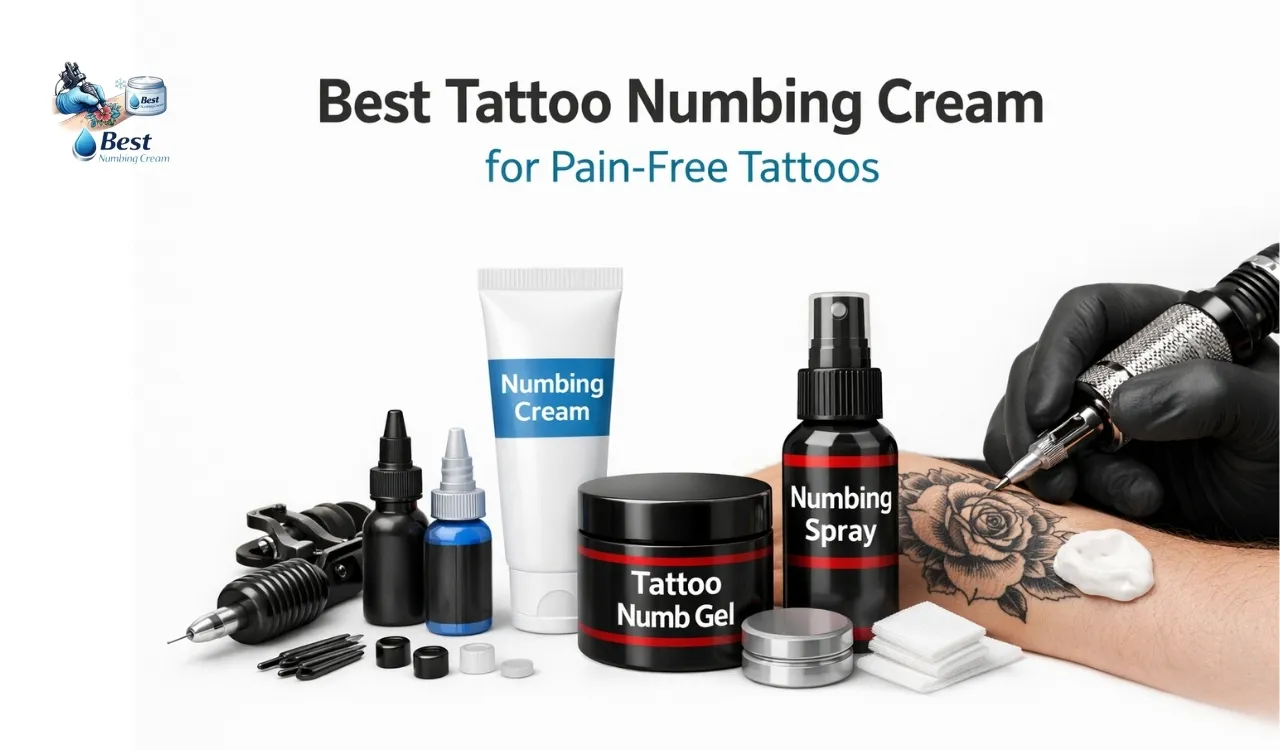
Discover the best tattoo numbing cream for pain-free tattoos. Compare effectiveness, ingredients, safety, and tips for comfortable tattoo sessions.
The feeling of getting a tattoo is thrilling, and the pain can literally defeat the entire mood, particularly when you are doing your first tattoo, it is a large one or the part that is sensitive. Some individuals manage to cope with it, many find it difficult to cope with the burning, sharp stings and that I can not sit still which makes long sessions appear to be impossible. The good thing is that you do not need to be miserable in order to have great ink.
That is where the tattoo numbing creams come in. These topicals are designed to minimize the amount of feeling you experience on the surface of the skin temporarily making you feel very calm and comfortable throughout your appointment. Being applied correctly, the process of tattooing can be less stressful, easier, and manageable with the use of numbing cream without stealing the appearance of the final piece.
What Tattoo Numbing Cream Is
Topical products used in tattoo application include tattoo numbing cream, which is used to apply numbness to the skin before tattooing to cause less pain and discomfort. It is used by temporarily numbing nerve impulses close to the surface to make the tattoo needle experience less sharp. Some individuals take it on longer periods, intricate line work or areas which hurt them more than others.
These creams are loved by both the beginners and the veteran clients. They may be beneficial when you do not have a high pain tolerance, are afraid of the needle, or who just prefer it to be a smoother experience. Although it is not always the case, they can greatly reduce the level of pain when used appropriately.
How Numbing Cream Works
The majority of the tattoo numbing creams operate upon a local anesthetic compound to prevent the transmission of pain. It is not supposed to put you to sleep, it is just supposed to dull sharp sensations and make the skin less sensitive, emollients, and reduce surface discomfort. There are also very many of these tricks that contain ingredients that are very soothing to the skin and make the process less irritating.
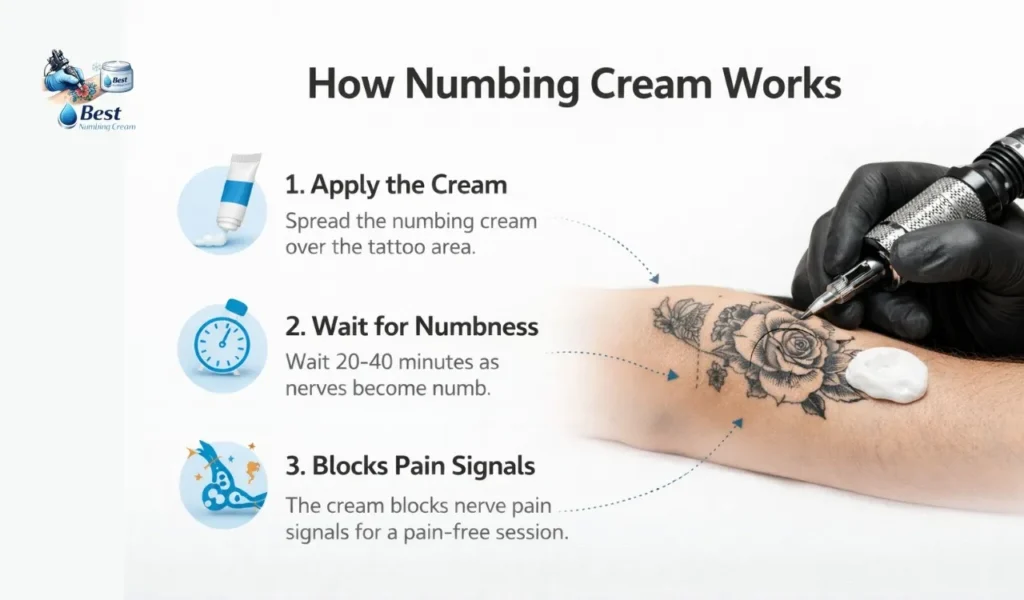
Still, numbing cream does not work wonders. This will depend on how strong the formula is, how thick you apply it, how long you leave it on as well as your skin type and even the location where you put the tattoo. This is why it is important that the usage should be appropriate as well as the product selection.
Who Should Use It
Numbing cream may be the answer for a lot of individuals, yet it will be the most significant to those who are getting tattoos in very painful regions such as ribs, sternum, spine, inner arm, elbow ditch, knees, ankles, hands, and feet. These regions have a higher density of nerve endings and are likely to be thinner which makes tattoos more intense.
It is also excellent to those carrying out long sessions or cover-ups where the needle remains at a single position over a long period. In case you have been tapping out early due to the pain being too intense, the numbing cream would help you to sit longer and complete your piece with fewer visits.
Key Ingredients To Look For
A tattoo numbing cream is a product that you should never buy without reading its ingredients. The basis of some formulas is on popular anesthetic elements, but others dwell on mild calming elements. Both are useful, but it depends on your sensitivity of the skin and the intensity of the numbing effect that you desire.
Lidocaine, benzocaine, or prilocaine are common ingredients that can be found and are used to decrease the pain signals. Aloe vera, chamomile, vitamin E or menthol may also work–they are not necessarily very numbing, and they may soothe the redness and make the skin feel less irritated at both ends of the session.
Lidocaine vs Natural Options
Which is a larger choice is the use of a lidocaine-based numbing cream or a more natural-type soothing formula. Lidocaine preparations tend to be more powerful in numbing and are commonly used in distracting painful areas or lengthy tattoos. They are made to be particularly helpful in curbing the needle bite which can be of great significance.
Natural or botanical-heavy creams can be less irritating, and better on the sensitive skin, but they might not numb so much. Others still prefer them since they are not so heavy, intense or skin friendly. The most appropriate decision will depend on your level of tolerance to pain and your body response.
How To Choose The Best One
There is more to selecting the best tattoo numbing cream than having the strongest being the best. You desire something that can match your time in the session, the type of skin, vitamin E, and what section is getting tattooed. A cream which will be very effective on one individual may not be effective on another; therefore, it will be prudent to concentrate on trustworthy characteristics.
Find a cream that is quickly absorbed, oily, and is spreadable with ease. It must also be external use friendly and provided with clear instructions. In case you have sensitive skin, you should not use strong smells or any harsh additives, and you should select a formula that has skin-supporting elements, such as vitamin E or aloe.
Patch Test Matters
Although a numbing cream may be described as safe or gentle, it is always a good idea to perform a patch test prior to the appointment. Other individuals are irritated, red or allergic- particularly when the anesthetic ingredients are first applied. The last thing that you would want to find out is a reaction on tattoo day.
Patch test To patch test, place a small amount on some hidden part of the body such as the inside of the arm and wait 24 hours. When you see that you are burning, swelling, having a rash or itching, then do not use that product on your tattoo. This easy measure will defend your skin and help to avoid stressful moments at the studio.
Best Time To Apply
Numbing creams have everything to do with timing. When you apply too soon the numbing will wear off before the tattoo is complete. When you apply too late it might not have time enough to become active. Applications of most creams are effective between 30 and 60 minutes prior to the start of the tattoo.
To achieve better results, lots of individuals put a thick layer and wrap it in plastic to facilitate absorption. This will provide a warm atmosphere and this may assist the cream to penetrate better. Or simply ensure that you take the instructions of the product and do not leave it on more than the instructions stated.
How To Apply Correctly
Many misuse numbing cream and think that it is not performing. Proper application can make you transform all. Begin by cleaning the area with slight soap and water and dry it completely. Cleanskin is beneficial as it allows even uptake of the cream and it also decreases contamination.
Then put on a good coating–do not massage it into the skin. Wrap it in plastic cover as required in the product instructions and leave it at the advised time. Prior to the tattooing, it is good to strip the wrap and rub the excess cream off so that the skin is prepared for the artist.
How Long It Lasts
The majority of tattoo numbing gels take 1-4 hours, however some test longer than 4 hours based on power and type of skin. The greatest numbness can be experienced at the beginning of the session, and then feeling will gradually come back. This is why the numbing cream is particularly useful in the initial stages when the pain is the most shocking.
In the case of longer tattoos, it is a good idea to discuss with your artist what to look forward to when the numbing goes away. Other individuals believe that the pain is more intense when sensation comes back and others are more prepared psychologically and can manage the remainder. In any case, it can still facilitate the session in general.
Areas Where It Helps Most
Some locations of tattoos are brutal. Numbing cream may be the ribbons, sternum, spine, neck, armpit, hands, fingers, feet, ankle, and behind the knee. These zones are more piercing and sensitive as the skin is thin and is near bone.
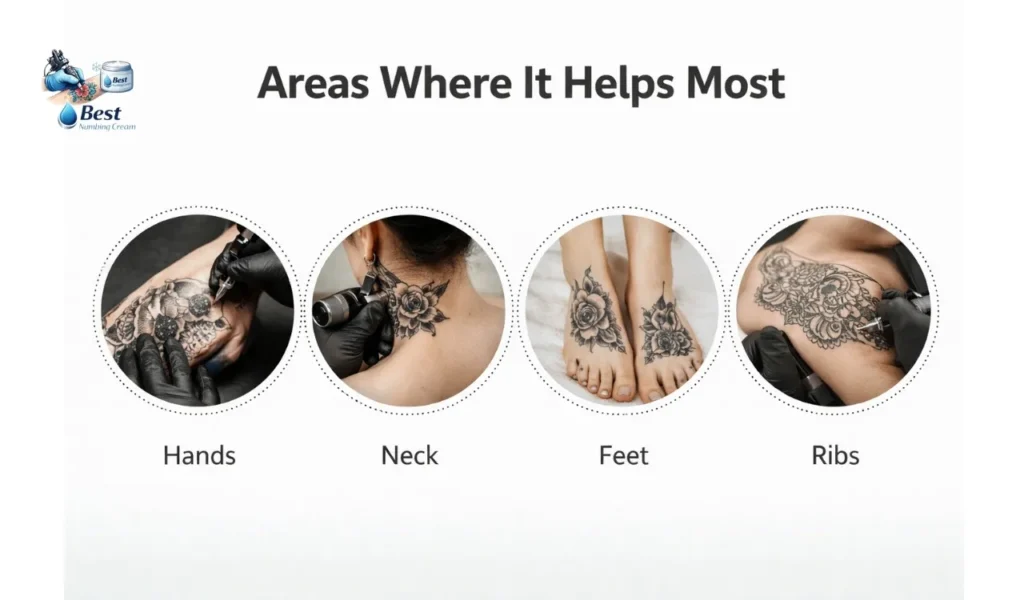
It is also useful in high-level work such as fine-line tattoos, shading and cover-ups where the needle remains in a certain locality and is moved back and forth. When you are choosing to have a tattoo and spend many hours doing it or even somewhere sensitive, having numbing cream will ensure that you remain stable and calm the entire time.
Artist Approval First
Numbing creams are not popular with all tattoo artists. Others believe it alters the behavior of the skin, and it is more difficult to work with, particularly when the cream enlarges the skin or alters its consistency. Some completely agree with it provided they are used in the right way and removed in a clean manner prior to tattooing.
The best thing to do is request your artist to ask you before you are appointed. Ask them what you are going to use, and take their counsel. An artist who is good will desire you to be comfortable, but wants you to have the best possible outcome. When comfort and technique are equal, you will find your experience with a tattoo a lot easier.
Safety Tips To Follow
When used correctly, the numbing creams are mostly safe, however, they still should be treated with respect similar to any other topical product. Never apply on broken skin, cuts or on irritated areas except where it is explicitly stated on the label. These are also not to be used in huge amounts and particularly on large areas as excessive anesthetic has side effects.
Limit it to outside use and avoid the cream on eyes, mouth, and other sensitive parts of an individual. You should stop taking it and consult the doctor in case you experience any form of dizziness, nausea, rash, and so forth. Risky shortcuts can never be superior to safe usage.
Aftercare Still Matters
Other individuals believe that numbing cream substitutes the aftercare- but it does not. The session will not be complete without proper healing of your tattoo. Apart from the numbness, there might be soreness, warmth, or irritation that is all normal once the numbness subsides. The most effective means of ensuring your tattoo is secure is through an effective aftercare regime.
Cleanse gently using a soft soap, do not scratch or pick at any scabs, and keep the area moist with a non-tattoo product. Hot tubs, heavy sun exposure, and swimming pools should be avoided during the healing process. Numbing cream is useful when you are doing a tattoo, but the aftercare helps to safeguard your end results.
FAQs: best tattoo numbing cream for pain-free
Final Thoughts
Getting a tattoo must be a feeling of empowerment, not a struggle that you are trying to endure. Being nervous about pain, or just not wanting to sit through the sessions in the past, a good tattoo numbing cream can become a good idea. It will not necessarily eliminate all feelings but can minimize the pain to an extent that the process will become less stressful and more pleasant.
To choose a cream with trusted numbing ingredients, perform a patch, apply the cream and ask your artist which are the most favored alternatives. It is possible that tattoo numbing cream becomes a stress free, confident pain controlled experience when used responsibly, as you will be concentrating on the art, rather than the sting.