Is 5% Lidocaine the Strongest Numbing Cream?
Is 5% lidocaine the strongest numbing cream Learn safe limits, FDA warnings, risks of high-strength products, and smart use for tattoos and skin care.
Lidocaine is a local anesthetic which acts by preventing transmission of pain along the nerve endings in your skin. That is, it does not eliminate pain at all, it merely makes the experience less pronounced in the short run. It is available in clinics and also in topical creams, gels and sprays that provide short term relief against irritation, soreness and discomfort.
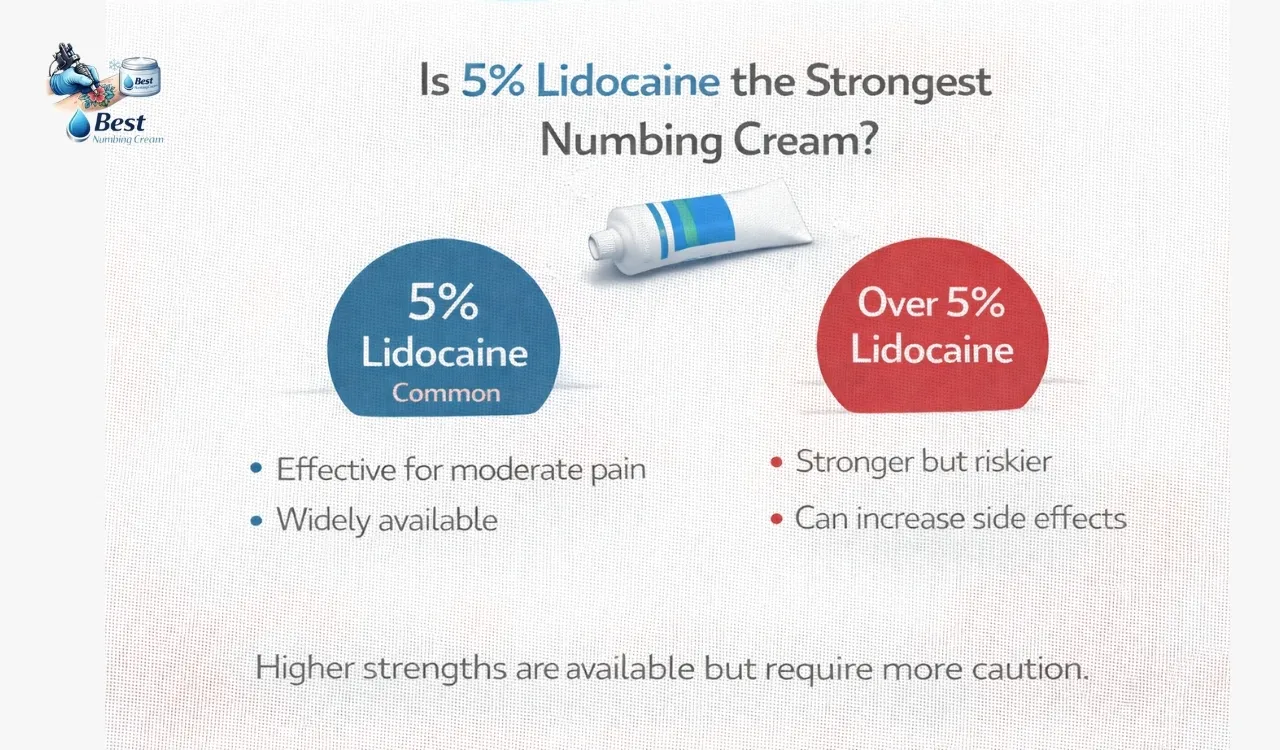
When individuals inquire whether 5% lidocaine is the strongest numbing cream, they tend to refer to what is the strongest one that they can readily purchase and perform at home. In most locations, the topical Numbing Cream are believed to be 5% maximum strength. Nevertheless, strongest does not necessarily imply best as increased strength can also imply increased danger when not applied in the proper manner.
Is 5% the Maximum?
Most consumer recommended topical numbing creams likely contain 4% lidocaine, and 5% is commonly referred to as a strong ingredient. That is why 5%liocaine numbing cream is always sold as extra strength, or maximum strength. It would be strong, particularly to sensitive places such as ribs, inner arm, or upper chest when tattooing.
However, the actual solution is: 5% lidocaine could be the most stressful, secure and typical home usage, subject to the regulations of your country and the legality of the goods. There are a number of products with high percentages, which do not necessarily mean that they are safe or even that they can be used as casual cosmetics.
Stronger Than Lidocaine
Yes, there are numbing solutions which can be stronger than lidocaine. There are some combinations of anesthetics that are combined to enhance numbing effects. The combination effect of various numbing agents can produce greater anesthesia than a single ingredient cream- even when the percentage of lidocaine is not very high on its own.
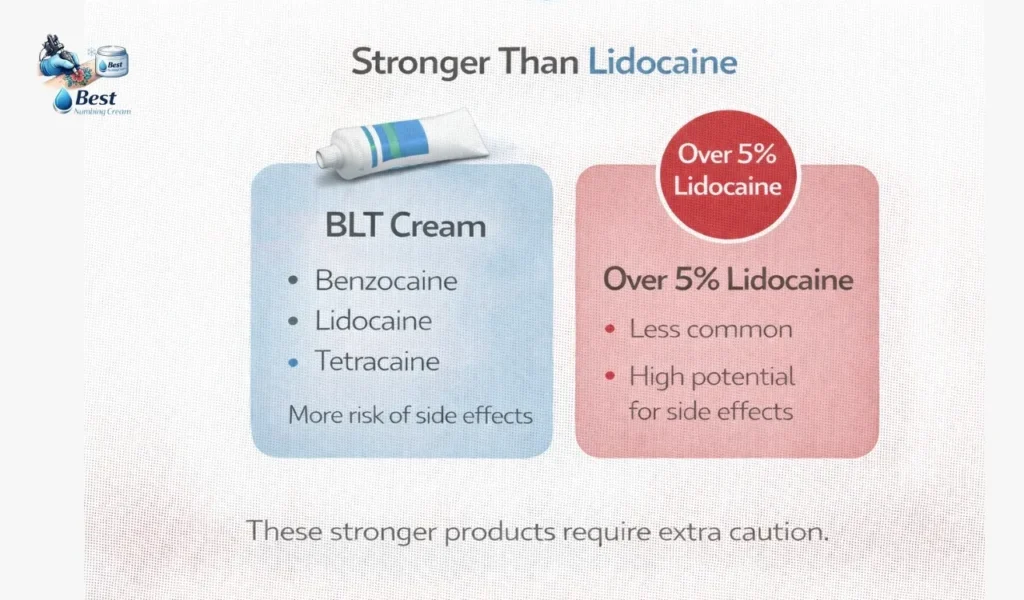
Nevertheless, more potent combinations are typically intended to be used in the work environment, where dosage, timing, and skin condition can be monitored. The issue is that most individuals attempt to apply the numbing products of professional level at home having no idea about the mechanism of absorption, and this may augment side effects and may lead to actual medical risk.
Why “Stronger” Can Be Risky
A lot of users may think that the higher the percentage, the better the tattoo experience but it is not so with numbing creams. The success of this is also determined by the way in which you apply this and the duration of stay as well as reaction of the skin. When administered excessively, or on a broad region, and left on too long, then your body can absorb more lidocaine than you are supposed to.
In situations where a large amount of lidocaine is absorbed through the blood, it may have an influence on the nervous system and heart. That is why, the word stronger can easily transform to be unsafe. You must aim at being comfortable with control, not the strongest by all means.
FDA Warning You Should Know
The U.S. Food and Drug Administration department (FDA) has also cautioned consumers against some over-the-counter topical analgesic products that are sold to have cosmetic treatments, such as tattooing, piercing, laser hair removal, and others. The FDA noted that there are products which are concentrated with higher quantities of Lidocaine than what is authorized to be used as an OTC topical analgesic.
The FDA cautioned that when high-lidocaine products are used in a manner that elevates absorption, as is the case with large areas of application, on a sore area, or under clothes, it will cause severe damage. Among the reported risks, there are irregular heartbeat, seizures, and difficulties with breathing. This is among the reasons why safe usage is important rather than the pursuit of high figures.
How Absorption Increases
A protective barrier is provided to you by your skin, but it is not flawless. Lidocaine may enter the body faster when the skin is warm, irritated, freshly shaved, broken, or inflamed. It is also able to absorb faster when thickly covered or by repeated application in a short period. The greater the amount of lidocaine that gets into your system, the greater the possibility of side effects.
Among the greatest errors that people commit is that they apply numbing cream such as lotion, apply it in great quantities and forget that this is a medication as opposed to a skincare tool. Numbing creams need to be taken with the seriousness as any drug, particularly during extensive duration tattooing.
Covering With Wrap Issues
Numbing cream is often applied to more areas in order to increase the effect by many people using plastic wrap. This is able to enhance penetration, but sometimes absorption can be enhanced to dangerous amounts. FDA makes a particular recommendation not to wrap the skin covered by OTC pain relief products, as they are associated with an increase in the risk of severe adverse effects when covered.
This is of great concern to tattoos since the part can be sensitive and some individuals are even numb of whole parts of their bodies such as an arm or a whole chest. Should you hold the cream under wrap too long the numbing can be more intense–but so also the danger, as in case of dizziness or nausea or abnormal heart sensations.
Safe Strength for Tattoos
Numbing cream Numbing cream When working with tattoos, 5% lidocaine is usually regarded as a high effective strength to most users. It is able to lessen pain when outlining and shading, particularly in painful areas. Strongness is not enough to succeed. It is often important that the right time and a restricted use is made rather than leaping to the top concentration.
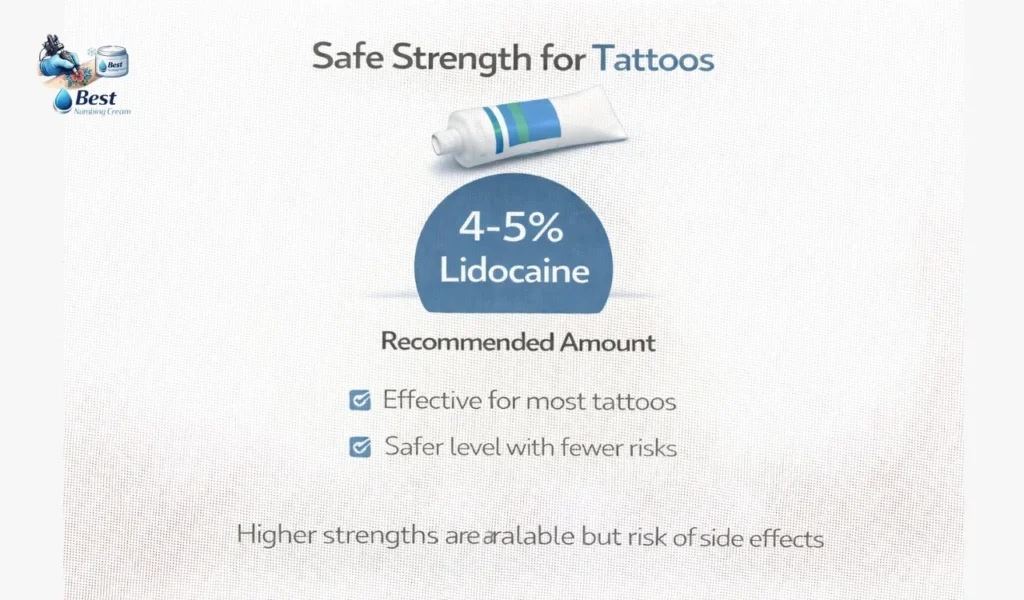
The more safe method is to apply a moderate dose, on the part of the body one is tattooing on that particular day, and ensure that they adhere to the product instructions. When you are doing a big tattoo, it would be better to numb in bits instead of numbing it all at once.
Best Use Practices
Numbing cream should be applied on a clean, dry skin in order to be used correctly. Lay on a dense yet restrained coating on the target area and do not go too far with it. Always wash hands once applied or use gloves to make sure that your fingers do not go numb either. Allow the required time to be effective before the active ingredient takes effect.
Above all, never place numbing cream on broken skin without the recommendation of a medical professional. Do not wear it too long or too often or on very large areas of body, either. Such practices are able to accelerate systemic uptake and pose safety risks.
Signs of Overuse
Your body can tell you when you have applied too much numbing cream or applied too much lidocaine. Mild complications may involve irritation of the skin, reddening or odd tingling, aloe vera. More severe symptoms can be dizziness, nausea, confusion, ringing in ears, blurred vision or higher heart rate.
In case of any abnormality, discontinue the use of the product and consult a doctor. Individuals tend to overlook the initial symptoms since they believe it is normal but the toxicity of lidocaine is not something that one should roll the dice on. Cosy numbness is always preferable to dangerous numbness.
When to Avoid It
Numbing cream does not suit everybody. Topical lidocaine should not be used without medical advice in case of allergy to local anesthesia, skin infections, severe eczema, or open wounds. It is also dangerous to use on large parts such as full legs or full back at once particularly in long sessions.
When pregnant, breastfeeding, on heart medication, or taking some supplements with which the medication might interact, you are advised to consult a healthcare professional first. Although lidocaine is ordinary, it still acts as a drug and it must be respected.
FAQs: Is 5% Lidocaine the Strongest Numbing Cream
Final Thoughts
Therefore, can 5% lidocaine be considered the most powerful numbing cream? To the majority of individuals seeking a good topical anesthetic that is more potent, 5 percent is commonly viewed as the maximum level of the topical numbing agent they can readily locate in the market. However, there are stronger products, and that is why the safety warnings are now so significant in recent years.
The best percentage to go after is not the highest one, but a safe strength that one picks and applies well. Using your tattoo or procedure efficiently, without overloading it on large areas of your body, and listening to your body will help your procedure or tattoo feel a bit safer and not be too problematic.