
Tattoo Pain Levels by Body Part – Ulimate Guide
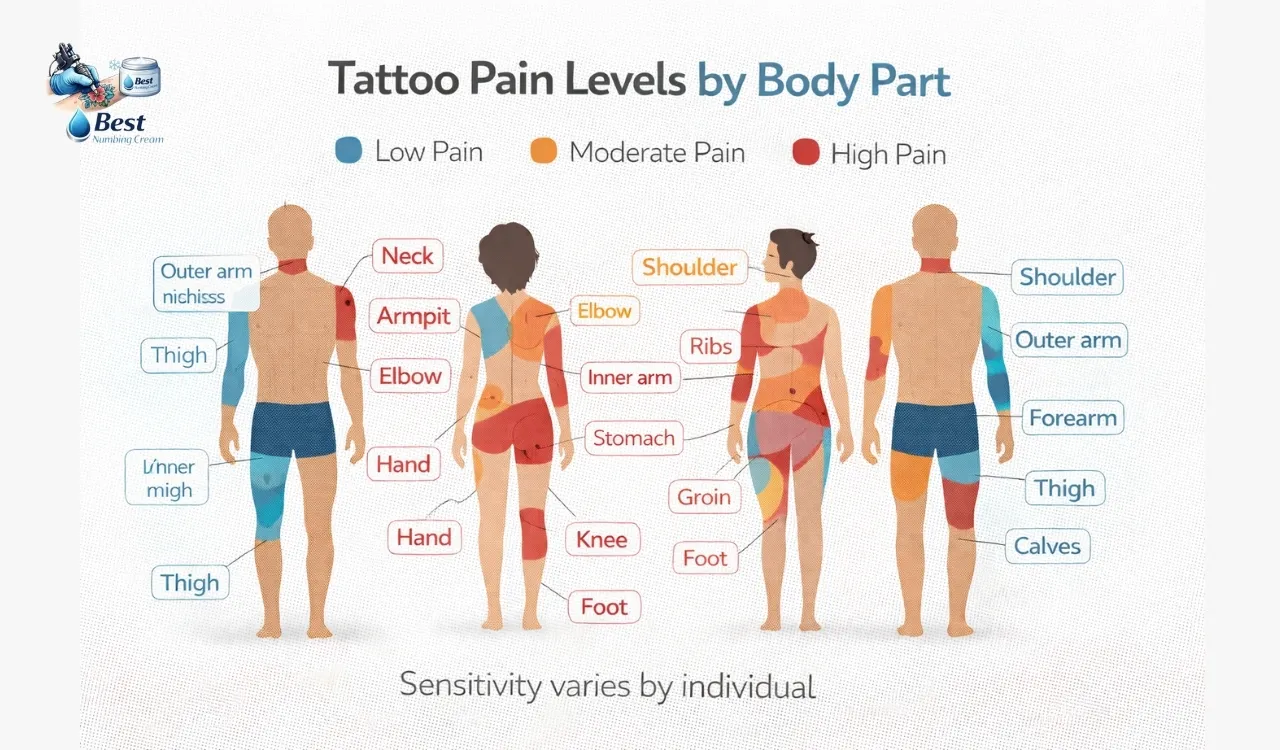
Tattoo pain levels by body part explained, from least to most painful areas, including why pain varies and what most people actually feel.
A major concern that individuals seek to know prior to tattooing is how painful it is going to be, and at which places it would be painful. It has occurred to me that this is one of the concerns of first-timers who wish to be prepared psychologically. The pain of the tattoo does not happen randomly, but it is not the same with everyone. The tattoo needle reacts very differently to different body parts. Knowledge of such differences will lead to a decrease in fear and unrealistic expectations.
The pain of tattoos is determined by the body part such as the density of the nerves, the dermal thickness of the skin, muscle coverage and proximity to bone. Impression of some places is closer to irritation, whereas others are sharp and intense. This article dissects the levels of pain on different parts of the body and the reason why certain pains are more painful than others, numbing cream. It is aimed at making you decide on placement carefully and simply get ready to your session without fear of it.
Why Tattoo Pain Varies Across the Body
The pain is not the same since the body is not homogenous. There are more nerve endings in some parts and fewer nerve endings in others or there are parts that possess thicker skin or cushioning muscle. Areas that are nearer to bone would hurt more. There are also roles played by blood flow and sensitivity.
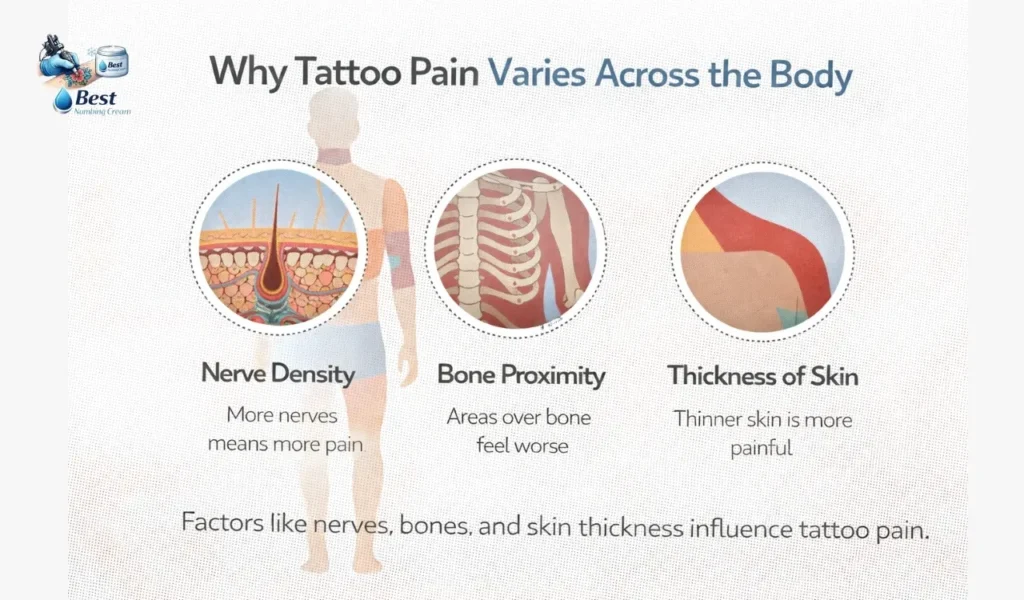
Personally, I find that it is surprising what areas are so painful. The expectations do not always conform to reality. Anatomy, but not toughness, affects pain, aloe vera. Any knowledge of this takes away so much unneeded fear.
Least Painful Tattoo Areas
Places that contain more muscle and fat tend to hurt less. These points surface cushion the needle and suppress nerve stimulation. The pain is more of pressure or scratching. Tolerance of sessions in this case is generally easier.
I observed that these areas are usually the start point of beginners. They give an easier way into tattooing. With less pain, the people are able to relax. Convenience gives assurance to subsequent tattoos.
Upper Arm Pain Level
An outer upper arm is regarded as one of the least painful areas. The skin is well-padded and thick. The density of nerves is not very high. Suffering is weak and regular.
According to my experience, there is a purpose behind the placement of a lot of first tattoos here. Sessions are usually smooth. As long as tattoos are long, they are manageable. It’s a beginner-friendly area.
Forearm Pain Level
The level of pain in the forearm is moderate. The outer forearm is not as difficult as the inner forearm. Nerves are more prevalent in inner parts and the skin is thinner. Numbing is more proximate to the wrist.
I have observed that forearm tattoos are trendy despite the moderate level of pain. Suffering is evident but bearable. It is not sharp as many people say but is irritating. The position of the choice in the forearm is important.
Shoulder and Upper Back Pain Level
The upper back and shoulder are low to moderate pain. The coverage of muscles contributes to sensation absorption. The pain is no longer sharp but constant. Here big designs are popular.
Personally, I have found that these are the areas that people manage effectively. Slight pain is experienced around the spine or the shoulder blade. Generally, it is a roomy room to work in a longer time. These are stability, which assists in endurance.
Chest Pain Level
Placement of chest tattoos may be quite painful to moderate to very painful. There is more pain in the areas close to the collarbone or sternum. The proximality of the bones enhances sensation. Comfort may be influenced by breathing.
I have observed sharp pains around the mid-chest area. The muscles become easier to deal with. The pain is subject to motion. Consciousness of location assists in anticipations.
Rib Cage Pain Level
One of the most painful areas is considered the ribs. Skin is thin and it is positioned directly on the bone. Sensation is aggravated by movement out of breathing. Pain feels sharp and intense.
Rib tattoos are very difficult as I experienced with clients who had experience. Breaks are necessary to make sessions unintimidating. Pain tolerance matters here, anesthetic. Rib tattoos need mental preparation.
Stomach and Abdomen Pain Level
The pain in the stomach is different to many people. There are regions that are soft and those that are sharp. Sensation is influenced by skin sensitivity and muscle tension. Discomfort may also be enhanced by stretching.
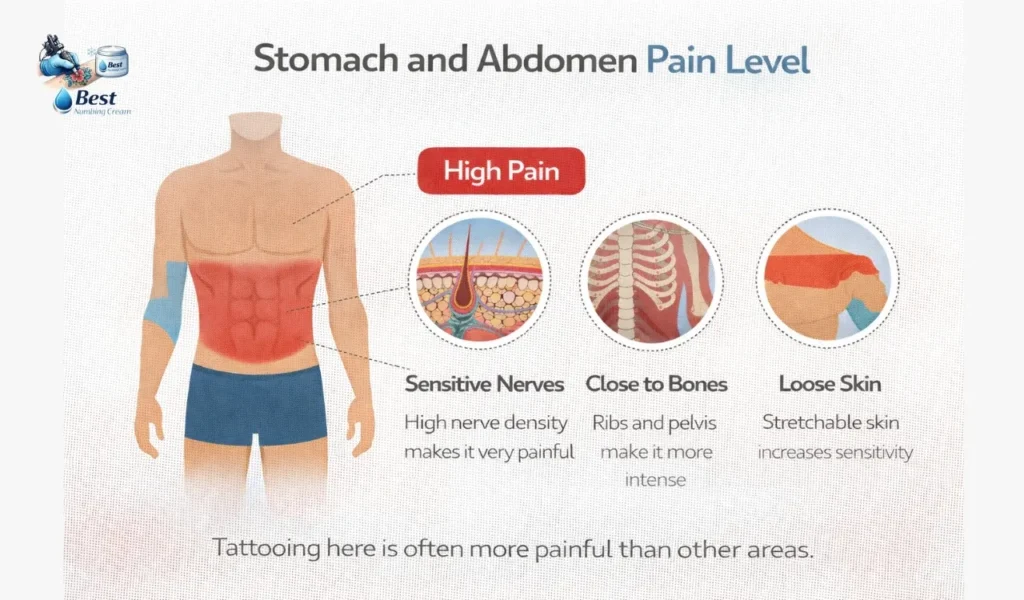
I have found that people usually underestimate the stomach pains. It can feel unpredictable. It is beneficial to relax. The level of pain in this case is dependent on body composition.
Thigh Pain Level
Outer thigh is normally low to moderate in pain. Cushioning is done by muscle and fat. Suffering is numb and tolerable. Extended periods are most often well endured.
In my case the inner thigh tattoos are far more painful. The sensitivity is increased to a large extent. When the position is altered in the thigh, the level of pain will differ significantly. External spaces are more pleasant.
Calf Pain Level
The calf tattoos tend to generate moderate pains. Muscle is useful in diminishing sharpness. Suffering is pain, which is normal and bearable. Movement may bring sensitivity to a minimum.
I have found that calves are manageable to many people. The pain is aggravated around the back of the knee. Overall, it’s a balanced area. Endurance is rarely an issue.
Ankle and Foot Pain Level
Most people find ankles and feet very painful. Skin is thin and close to bone. Nerve endings are dense. Vibrations feel intense.
Foot tattoos are difficult, as I have found out. Sufferings can be acute and intense. Immediately after, swelling is associated. These are very demanding in terms of pain.
Hand and Finger Pain Level
Very painful areas of tattoos are hands and fingers. Skin is thin and sensitive. Proximity of the bones causes more discomfort. The pain is acute and continuous.
I have observed that these are one of the areas that surprises most people. Little tattoos do not imply little pain. Healing is intolerable as well. The hand tattoos require planning and time.
FAQs: Tattoo Pain Levels by Body Part
Conclusion
Tattoo pain levels by body part vary based on anatomy, nerve density, and skin thickness. Areas with more muscle and padding tend to hurt less, while bony or sensitive areas hurt more. Understanding these differences helps set realistic expectations. Pain is part of the tattoo process, but it isn’t the same everywhere.
From what I’ve observed, choosing placement wisely and preparing mentally makes a big difference. Pain tolerance is personal, and no chart is absolute. Knowledge reduces fear and builds confidence. With the right mindset, even challenging areas become manageable experiences.